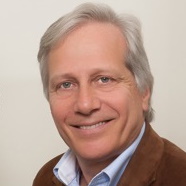
Dr. Alex Lidow, CEO and Co-founder at Efficient Power Conversion (EPC), joined International Rectifier as an R&D engineer and is the co-inventor of the HEXFET power MOSFET, a power transistor that displaced the bipolar transistor and launched modern power conversion. Over the 30 years Dr. Lidow was at IRF, his responsibilities grew from engineer to head of R&D, head of manufacturing, head of sales and marketing, and finally CEO for 12 years. In addition to holding many power MOSFET and GaN FET patents, Alex has authored numerous publications; most recently he co-authored the first textbook on GaN transistors, GaN Transistors for Efficient Power Conversion. In 2004 he was elected to the Engineering Hall of Fame, and in 2005 IRF, under his leadership, International Rectifier was named one of the best managed companies in America by Forbes magazine. Dr. Lidow earned a Bachelor of Science in Applied Physics from the California Institute of Technology and a doctorate in Applied Physics from Stanford University. Since 1998 Alex has been a member of the Board of Trustees of the California Institute of Technology.
|
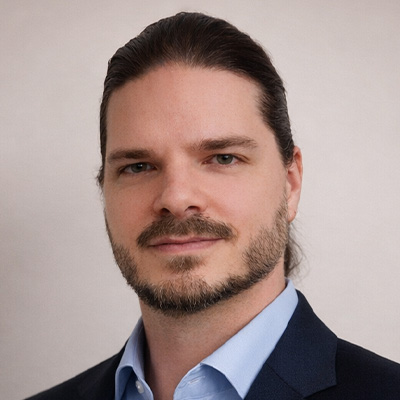
Dr. Jens Baringhaus holds the role of Chief Expert for “Wide-Bandgap Technology” at the business unit Mobility Electronics at Robert Bosch GmbH in Reutlingen. He is responsible for Bosch’s wide-bandgap product roadmap. He received his B.Sc. and M.Sc degrees in physics from the University of Hannover, Germany, in 2009 and 2011, respectively, followed by a Ph.D. in semiconductor physics from the same institution in 2015. He joined the Corporate Research division of Robert Bosch GmbH in Renningen, Germany in 2016 as Research Engineer focusing on wide-bandgap power devices. He became Senior Expert for “Process Development for Power Semiconductors” in 2021 and led the research and development activities on novel wide-bandgap power transistor architectures.
|
Thomas Heinzel is General Manager of the Semiconductor Technical Division at Fuji Electric Europe. He graduated in Electrical Engineering from DHBW Mannheim in 1988 and began his professional career at ABB in Mannheim, where he worked in the Traction Division from 1988 to 1998. During this time, he was involved in the development of a control unit for a three-level, three-phase inverter, including its control pattern and PLD algorithm. He also developed and commissioned a 60 kVA three-level transistor inverter for light rail vehicles and conceived and developed a new auxiliary inverter system for railway applications. In addition, he was responsible for project management of the auxiliary inverters at Adtranz in Mannheim. In 1998, Heinzel joined Fuji Electric Europe GmbH, where he established application support for power semiconductor customers throughout the EMEA sales area. He subsequently built a technical support team, including a quality analysis function, and implemented an R&D team supporting European customers. Since 2014, Heinzel has headed the Technical Department of Fuji Electric's Semiconductor Division. The department covers application engineering, quality assurance, development, and TIM pre-pasting. Since 2021, he has been Head of the Semiconductor Technical Division, which is divided into three departments: Application Engineering, Industrial Design, including TIM production, and Quality Assurance. In this role, he is currently responsible for a team of 20 employees.
|
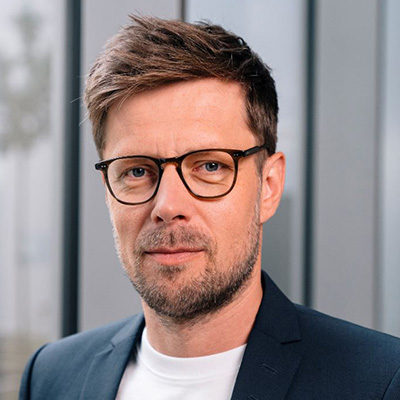
Michael Woittennek is Vice President of the Wide Bandgap (WBG) Business Unit at X-FAB and Managing Director of X-FAB Dresden. He leads X-FAB's global SiC and GaN business, with responsibility for strategy, technology roadmaps, business development, and manufacturing scale-up. As a member of X-FAB's Corporate Management Team, Michael is focused on accelerating the industrial adoption of wide-bandgap semiconductors and helping customers bring next-generation power technologies into volume production. Drawing on extensive experience in semiconductor manufacturing and operational leadership, he brings a foundry perspective to the challenges and opportunities shaping the future of the wide-bandgap industry.
|
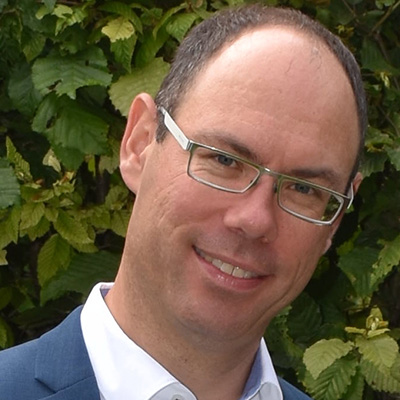
Alexander Reich (Director) is responsible for the product line heavy duty and performance inverter within Schaeffler AG. He started to work on power electronics for electrified vehicles in 2004 and has since then a strong focus on integration of semiconductors for high power inverters. In a very early stage Alexander actively promoted cooperation between semiconductor suppliers and automotive Tier1 to optimize continuously power stages for inverters. This work includes IGBT, SiC and GaN technology. For several years Alexander was responsible for the competence center of power electronics at Maschinenfabrik Reinhausen, developing equipment for HV-grid applications.
|